

Usually, people spend too much time talking about what they’re going to do, and not enough time doing it. Isn’t it funny that it’s the skills you often excel at, you tend to advertise the least? It has to do with uncertainty. The less certain we feel about a subject, the more we feel the need to compensate by puffing our chests out and talking about it like we know our stuff.
I want to tell you a story about my LinkedIn phase. During the summer of 2023, I literally thought I had found the perfect social media platform. It was inspirational, an easy peasy way to “network,” and to learn from the greats of the LinkedIn world, full of savvy professionals and entrepreneurs. I mean, who doesn’t want to eat thought leadership for breakfast?
I did a little posting of my own, mainly sharing stories I had covered for established and emerging entrepreneurs. I thought I was having a blast at first, with all these newfound connections from all over the globe. A year of doing this type of journalism did open me up to a foresight of “opportunity.” To listen, to inquire, and to observe from people whom I thought were super intelligent. But here is the thing: Despite how much I was learning from other’s experiences, trials, failures, and efforts; I wasn’t moving much in my own life.

I swam in this sea of thoughtfully procured content on LinkedIn, thinking it was superior to spending my time on Instagram or Facebook (perhaps it was), but ultimately, talking and listening don’t always lead to action. In fact, sometimes you can misconstrue how much you think and talk about something, with what you’re actually accomplishing.
The truth is, I wasn’t signing business when I was talking about it on social media. I wasn’t fully in the grind when I was posting a motivational weekend sentiment. Unless posting on LinkedIn is part of your job or part of a bigger ongoing marketing strategy, it pretty much is just another social media app. An endless crusade to find content that’s entertaining and kind of inspirational.

It’s been more than three months since I’ve been on LinkedIn. And one thing you notice right away, is that literally no one cares. You’re not on Linkedin to make friends; you’re on there to shine your armor. But sometimes you need to put the armor to complete rest and dust up on basic tumbling. Here are some sprinkles of wisdom I learned for going silent— and no, I’m not sharing it on LinkedIn.
Revel in Your Wins in Silence
Here’s a wild thought. Could you not reflect on your doings and mistakes without sharing them with a bunch of strangers and acquaintances? As someone who is actively trying to build a platform on social media, I am totally guilty of this. But to be fair, most days I try to refrain from posting every single minute detail of my life like it’s a fucking endless B-roll. (keyword: trying). No one cares how I’m getting ready in the morning and I am actually totally okay with that. In fact, if ever I felt that people were waiting for my every move, I could actually see myself having an anxious breakdown. But here is one thing I am fully supportive of: Doing lovely things and practicing habits for yourself. It’s tempting to hit a button and send out a speech to the ‘world’ about how you’re going to do X or quit X in 12 months, or whatever time frame. But you know what’s even more powerful, and often more effective?
Saying those same things to yourself in silence, or writing it in the back page of your journal. It’s like your little secret and you’ll share it when it comes to fruition. It’s like being in stealth mode in startup terms. You don’t want to give away the secret until the prototype’s been completed, market-fit’s been confirmed, and you’ve assembled a good team to execute.

Here’s the reality: We don’t accomplish all our goals and we don’t always do the things we said we were going to do.
The energy required to make a guarantee and then to take it back, to explain yourself, is so energy-consuming. Why put yourself through that in the first place?
I’m a huge fan of the concept of just doing your best in the day-to-day, and reflecting on what went well, and what didn’t. If you do this every day, gradually through time you’ll get to observe some very interesting things.
First, the majority of days are going to be pretty average. You are going to have an average mood, you probably are going to do some pretty average tasks, meaning things you’re used to doing; you’re probably going to be as busy as you’re used to being, and you’ll probably see the same number of people day in and day out.

And then there are going to be some above-average days, where you hit certain goals, close a big client, or receive a wonderful gift from your partner. We have to be okay with the fact that living an upward and fulfilling life doesn’t mean we’re at the peak of the roller coaster every day. The majority of the time we’re cruising on flat concrete.
If you are constantly chasing the next “thing”, you’ll likely fall for distraction, maybe even depression because soon you’ll run out of things to chase. You’ll start chasing highs that are more destructive, than productive. Being still and acting silently does not mean you’re not moving in the right direction. Remember that, next time you “feel” like you’re in a “rut.”
Feeling stuck? Make sure you check out this article, on how to get unstuck.
The Journey is Long and Success is Brief

Most of the phases we go through in life trying to accomplish something “big” feels long and at times, boring. Imagine an aspiring doctor trying to complete their medical degree – ten years in the making. Or a starving entrepreneur trying to get to their first million in revenue. Or a talented singer just trying to get on to bigger stages. It is often those who have seemingly the largest goals that are the most miserable.
I think of fashion empress, Kate Spade, who sadly committed suicide before the age of 60. Or the godfather of comedy, Robin Williams, with a smile that radiated every television screen in North America. Although there are many factors, some genetic, involved in depression— it’s no secret that those at the top, or those who are the best at their craft are often the ones who suffer greatly under the weight of their potential.

Those who attain success early on in life, are more susceptible to these cruel symptoms. I think of a lot of childhood stars or Gen Z influencers, now on their way to becoming millionaires; who regularly suffer panic attacks and sometimes, substance addiction despite all the accolades, money, and fan love.
People, like you and I, who are just trying to find their balance and place in the world may feel sometimes so extraordinarily mundane under the influence of chatter we see every day online. Who’s and who’s French Riviera wedding destination, and who’s and who’s new sports car, and mansion under 3 million bucks.
Life as we’re used to starts to look different.
“What could I be”
Am I doing enough?
Could I do better?
Those who have chased success in the better “half” of their lives view it from the point of:
“I’ve been trying so hard for X, Y years and still haven’t made it to this finish line.”
“I moved this finish line and adjusted it so that it may feel more achievable so many times, yet nothing.”
We become so fixated on the losses, that we forget that where we are now is miles away from where we started. When you’re young, five years may feel like an eternity and it may feel like it’s too late to start anew. But in the grand scheme of things, five years is like a flash of lightning under the thunderstorms and spring drizzles of this mysterious life.

I want you to remember this the next time you’re shrouded with thoughts of self-doubt. And now I want you to remember a moment when you’ve felt successful. It doesn’t have to be a huge life accomplishment like getting promoted to XY, but it can even be a small win like getting a solid lead for your business. Now, I want you to reflect on how long that feeling lasted.
For me, that feeling rarely lasts throughout the day. Lucky, if it lasts more than three. The truth is, success itself is quite boring. It’s a little spike of adrenaline, followed by an inkling of self-doubt, “Oh, I couldn’t have done it on my own” or “Oh, I got lucky this time.”
The truth is no matter how hard you’ve worked for it, you’re always going to find a scapegoat to take credit for your success. There is very little sustenance in success itself and in fact, sometimes it makes people more egotistical and unbearable to be around. Success can change people in many ways, and not always is it positive.

Success is measured longitudinally. There are those who’ve accidentally fallen into wealth or gotten successful early on and then chose to do nothing thereafter. They’re like that one-time breakout star. Then, there are those on a lifetime mission— these are the people, like Kate Spade, Steve Jobs, or Stephen Hawking, whose legacy precedes them well beyond their death. This is why most truly wealthy people aren’t thinking about how they’re going to screw or exploit their way into more wealth; they think about how they’re going to leave a legacy. At a bare minimum, make the world a better place after they leave.
People that constantly chase whatever their perception of success is, often do not ever become that successful. Nor for that long. For others that take a slower approach to success, playing the “Infinite Game” as Simon Sinek coined it, are more likely to achieve more sustainable and lifelong success. Whether it’s by taking a society-changing company to an entirely different ballgame; or by passing their knowledge onto thirsty mentees to elicit change in a bigger way.
There’s nothing so glamorous about the road to becoming a success story. And that’s because the majority of the time getting there, most successful people do not dream about becoming successful. They are just like you and me, thinking about how to find their place in the world, how to make a difference, and what the next move is. The fluffy stuff you see, the all of a sudden higher quality footage, Oscar-worthy B-rolls, and sudden metamorphoses are near the tail end of someone’s journey to success. It’s the climax leading up to the grand finale, and it’s too bad you rarely get to see the low-budget beginnings.
Read here: Make your 9-5 a Breeding Ground for Success
So Why go Silent Mode?
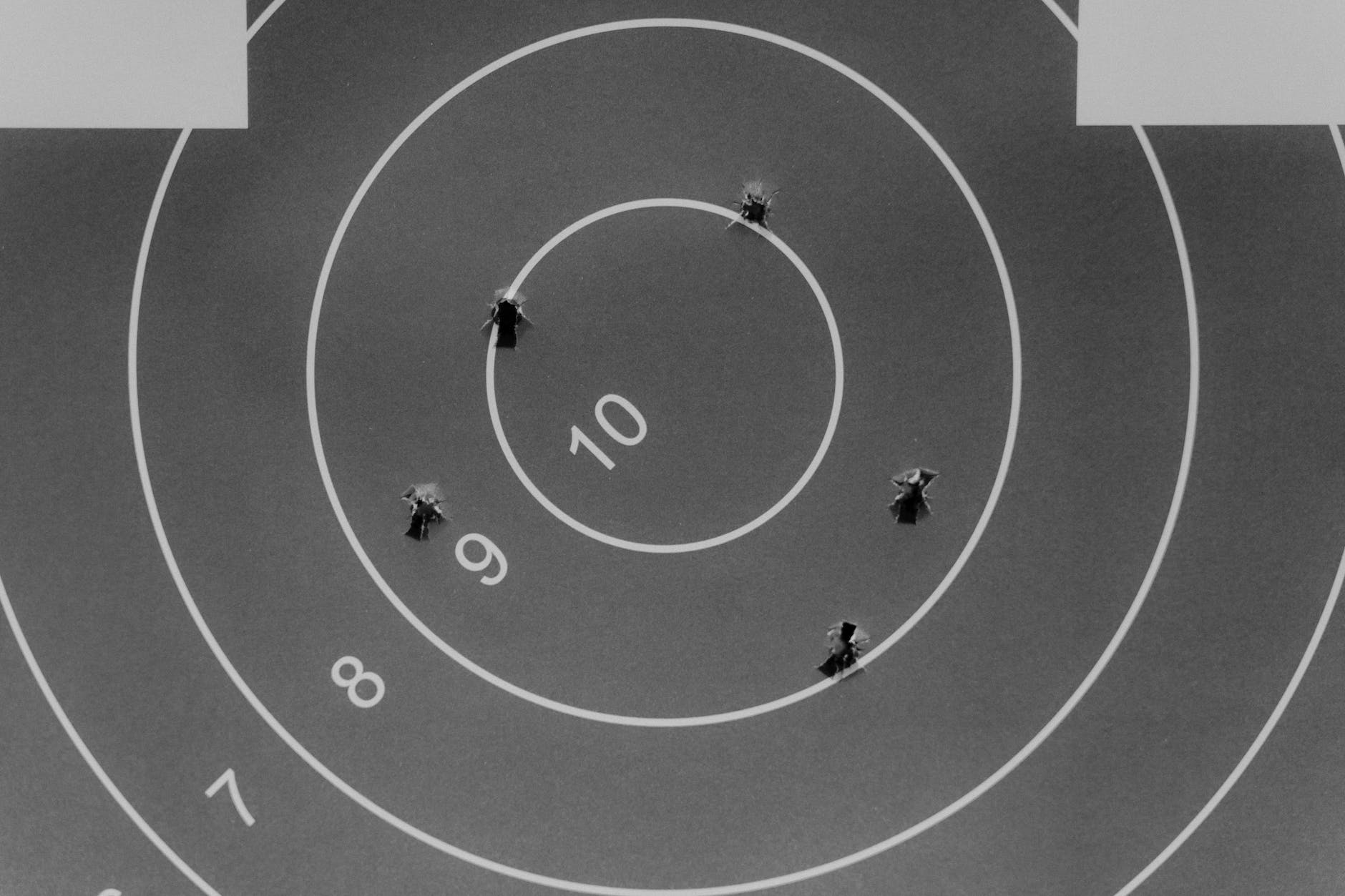
There are apps out there designed to help people avoid distractions and concentrate on important tasks. I want you to implement the same mechanism in your life, on a grand scale. Turn off for a while, and you’ll come to see that your words right now bear pretty insignificant value on the market. I’m not saying this to hurt you, I’m merely pointing out that sometimes taking a long break from gallivanting your accomplishments to the world, can serve you in the long run. You don’t have to make every connection, and you certainly don’t always have to respond to every message (especially from strangers). Connections online can be fimble, focus on what’s physically in front of you. Get so intensely focused on your goal, or personal mission, that it leaves no time to boast about it.
Become a sniper instead, one that never misses. The target?
Your potential, your goals, your mission.
Share your personal mission below, I want to hear it (or follow my advice, and don’t…up to you.)
Rooting for your success,

Enjoy Tips on Productivity? Read more:
Top Mind Hacks for Being Less Envious and More Successful

 Secret Prose
Leave a reply to How I Got into Marketing without a Marketing Degree – Saveur de la Vie by Naomi Peng | Personal Development Blog Cancel reply