
Do you ever find yourself feeling overwhelmed?
This uncomfortable feeling tends to arise when we perceive there are too many things on our plates. The problem is, we tend to see our lives through a short-eyed lens. Whatever, we “feel” like doing now, we act upon it— even if it might not make much sense in the long term.
For example, there will be days when we feel like our capacity is wide as a net, and we overcommit ourselves to multiple projects or social events. However, these are ‘occasions’, rather than our baselines, When we return to our baseline on any given day, we look at our calendars and the pending amount of work we have to do and feel overwhelmed.
I’ve experienced this often, and in this post, I will outline a few ways we can avoid this trap and reduce our stress levels on the day-to-day.
Prioritize a few things at time
You might be the type of person who’s unquenchably curious and excited to do multiple things at once. And although balancing our days with an assortment of activities can make our days more fun and lively, it’s when we start to overstack our days with various different tasks that can lead to overwhelm and diminished quality.
What I find helpful is segmenting the days of the week to prioritize one task. I started doing this because I found that when I had multiple things on my “to-do” list throughout the day, while I was doing one task, I was already anxious thinking about the two or three other things I had to do. Then, if I was unable to accomplish everything on my list, I would feel bad about myself.
My solution is to focus on only one to three priorities a day. If you complete everything on that list to the best ability, then you can add on more. This way, you can ensure the most important tasks are being done to the greatest quality.
I personally love Fridays—not only because it’s one day from the weekend. It’s because Fridays are my dedicated days to consolidate and edit my writing from the week, and also just write!
When there’s nothing else on my radar, my brain feels clear and free to do the thing that’s in front of me.
Be Mindful of Your Productive Windows
Have you ever struggled to stay awake during work? I know I have. I also know there are windows of time I’m at my most energetic.
This is in the morning (between the time I wake up at 2 pm) and (5 pm-8 pm). A lot of us feel obligated to abide by a certain schedule and have our work done by a certain cut-off time. I used to think this way too until I realize I was just dragging my feet throughout certain hours.
So what do you do from 2-5pm? I do things that don’t require too much mental energy. Go to the gym, make lunch, grab a coffee, and go for a walk. Do things during your low-energy time frames that replenish you, this could look different for everyone. That way, during your windows of productivity you feel refreshed and ready to go.
Plan out your week in advance
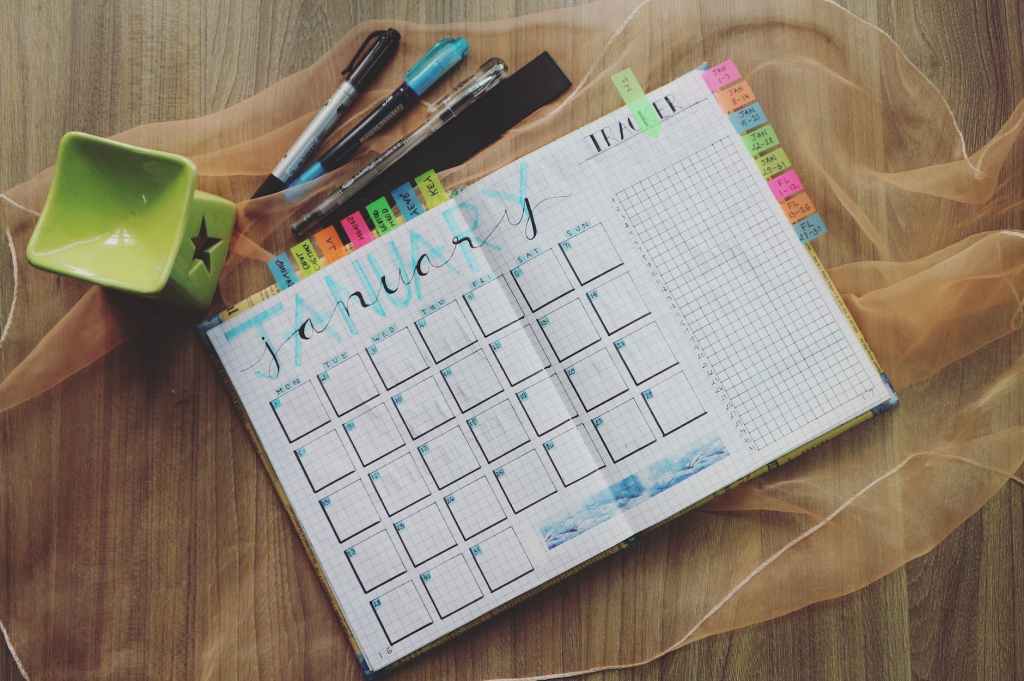
Organization and planning around your priorities set you up for less decision-making throughout the week. Sometimes deciding what you should do at any given time is the most energy-draining part of the equation, especially when your willpower is low during those low-energy periods. If you map out your schedule far in advance, then you know exactly what you need to accomplish, where, and when, so that you meet all your priorities for that week. Your priorities during the weeks add up to a long-term objective or goal. Breaking up long-term objectives into weeks and days makes it less overwhelming for us to start on a project. I personally also color-code my time blocks in accordance with my priorities. Looking back at my calendars, it gives me a pretty good idea of where I’m focusing my time the most, and whether there needs to be some rebalancing if I’m spending weeks on weeks focusing on just one or two priorities, and neglecting important ones like creativity and health.
On the day-to-day, you don’t feel the effects of skipping out on relationship-building time or getting exercise, but in the long run, these events start to add up. That’s why it’s important you make these decisions for yourself ahead of time, so you don’t have to rely on impulse during the week.
Conclusion
Life can get stressful and overwhelming when we don’t have systems around how to get things done. The antidote to this is simplifying our lives by creating set routines around our core priorities. If we’re able to do a few things extremely well, it will lead to more accomplishment in these areas and decreased mental load. When we simplify our lives around a few important areas, we’re able to do more in these areas, instead of dispersing our attention across multiple things. Sometimes, the decision is difficult to choose between projects that excite you, but remember, you can always reignite that project at a later time. But if you burn out from trying to accomplish too many things at once, it may take longer to recuperate and it might lead you to abandon those things altogether.


 Secret Prose
Leave a reply to Naomi Peng Cancel reply