

Truthfully, despite the positive images of my life that I let people see online which depict a happy, vibrant, and healthy lifestyle, I find myself often living in a state of mental scarcity.
Sometimes you can do everything that should theoretically contribute to happiness and well-being— such as making your home nice and comfortable, adopting a regular exercise routine, and allocating time to spend with people. However, if your mental health isn’t in a stable place, most of these things have a lesser effect. That is the trepidatious reality I face every day and I learned that sometimes ‘being happy’ can directly contradict what you’re trying to achieve.
I’ve heard something recently that was quite powerful. “Happiness and success are two different things, you can’t expect to get the other by having one”.
That spoke to me because recently I’ve been churning away at a project and it’s been a very uncomfortable journey. I don’t know if other people who do similar things for work feel this way: but when you’re starting out, things always somewhat feel stalled with a few given ‘bursts’ of progress. I’ve come to terms early on that working for myself was like going to a job, except in the beginning there are no other employees…except me.
Over the years, I’ve developed a paradoxical fear of being happy. Whenever I found myself in a content or joyous state, there was this fear of when those feelings would be ‘taken’ away from me. Now, there are lots of notions out there that claim if you do a certain thing, like practice self-care or meditation, you’re bound to be happy. Those things can contribute to long-term happiness, but that’s almost the equivalent of saying if you just switched one thing in your diet, you’re going to be a healthy person. The reality is, that there are numerous factors that can determine whether you’re a happier person or not.
So, here are my two cents on happiness, habits, and work.
Being successful is not equivalent to being happy
It’s fair to say, we all thrive for some degree of success. For some, success means escalating to the highest reins in the career world. For others, success means being in the best shape ever or being the best spouse or parents.
Many of us work our entire lives chasing the pinnacle of success, only to find that when we get there, we’re not automatically happier people.
We misconstrue what it means to be happy, and what it means to be successful. I’ve said this many times, but there is no shortcut to success. Becoming successful at something means you have to essentially win over the strong odds of failing. As failure these days is touted as some holy grail to success, we often don’t address the impacts failure actually has on our mental wellbeing.
Yes, overcoming failure in the long run is a good thing. We grow a thicker skin, learn what works and doesn’t, and ultimately, become more resilient. However, if you keep falling down repeatedly, the chances of developing a serious problem in your muscle or ligaments are more likely. Not to say we’re going to develop mental damage from failure, quite the contrary is true, but you have to admit that each time it feels like a minor setback that you have to take time to recover from.
So one, not only are you nowhere close to the “peak” where your expectations for yourself reside, but you’re constantly falling, injured, and scarring from these incidents of ‘failture’.
One of the factors of happiness, in my opinion, is some level of emotional stability. You don’t let negative or positive events take too much of a toll on your well-being.
Well, let me put it to you this way. When you’re in a state of mental scarcity like I am sometimes, you want to grab onto every second of positivity you can when it comes your way. The small wins are amplified, but that means, the downward swing is equally monumental as the positive. This is not an equation for happiness, but a formula for a disastrous ride.
If you practice self-care, it doesn’t mean you’ll be happier
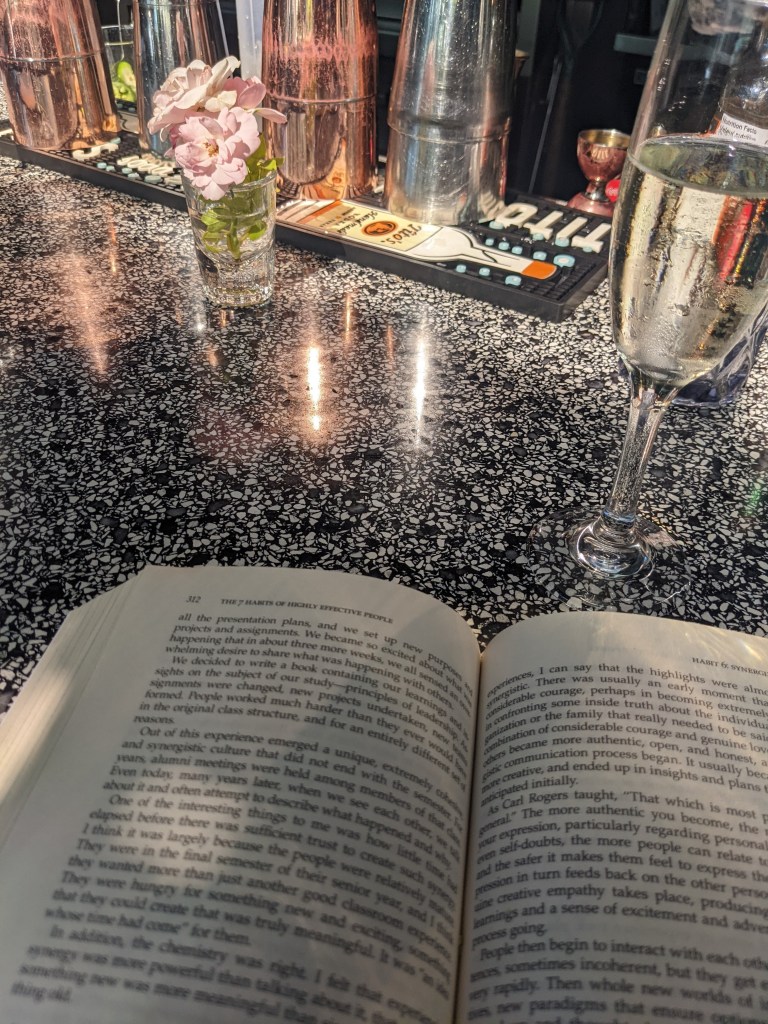
Another holy grail I want to talk about is ‘self-care’. Self-care refers to the act of consistently attending to our own needs, whether that means physical, emotional, or mental. It also touches on things like self-compassion.
I’m all for including these ‘micro-actions’ into your daily routine, as a way to form a habit around self-care. It’s truly an effective preventative measure for burnout in my opinion, and just overall learning how to respect and honor yourself as a human being.
However, just because I go to the gym on a regular basis, take myself on dates, and take time to read and listen to podcasts—- doesn’t essentially mean I’ll be a happier person.
This was a rude awakening for me. It feels like I’m doing ‘everything right’, and I have the things in my life that ‘should’ make me happy. But somewhat, I still sink into these loops of despair.
Happiness doesn’t mean you’re always over the hills—rather, it just means you have a higher frequency of experiencing emotions of contentment.
Training yourself to be on the lookout for what does bring you peace and puts a smile on your face, is something we can do to increase our happiness levels. These can be the smallest things, from the way freshly grounded brewed coffee smells in the morning, to a friend’s warm and genuine smile.
We’re often so zeroed in on our own mental dilemmas or our phones, that it takes away from the overall experience of life. I’ll give you an example. Most recently, I attended a boat party with my partner. When the sun went down and the sky transitioned into that cotton candy color, all I wanted to do was stare out into the ocean and appreciate that gorgeous moment. However, he was so consumed by what was going on, hundreds of miles away in someone else’s life, that we failed to share that moment together. Little moments, as futile as they seem can change everything.
It is in little moments that people meet, connect, collide and drift.
I realized one thing that day. Regardless of how much success or things you got in his own journey, he’s always living in a constant state of distraction.
There’s a somewhat easy formula for a happy life, but it’s hard for most to acquire

I essentially believe there are three requirements for people to live a sustainably happy life.
Connection
Health
Purpose
When we lack one of these things, it’s hard to live a truly happy life. For example. We might be in perfect health and have an amazing career that we’ve always wanted, but if we don’t have people in our lives we can connect with and share experiences with, it will always feel as if something were missing.
There’s increasing messaging out there, especially in western culture that work goes beyond the means to an end. If you lived on the west coast, or in places like New York, or just turned on the television, you know that there is an abundance of wealth available. When the factor of money is no longer an issue of survival, what’s the next step? Self-actualization. We are expected to use work as a means of self-actualization, and purpose-finding.
The other issue is that if you live in a city (like Vancouver) where living costs are relatively high (housing, food, basic necessities…ect), it’s hard to get by on a regular entry-level salary.
So not only are you worried about self-sufficiency, but you are worried about the ‘other part’ of the equation that you’ve been living with for years. There’s a double-ended pressure here to not only excel financially but also in a sense where you’re working this ‘dream’ job. That can cause tension and unhappiness within ourselves when we fail to meet either of these expectations.
The other part of the ‘formula’ is health. I’ve been sick myself and hospitalized when I was young, and literally being ‘close to death’, brings life into more perspective. Today, I am healthy and well, but I know that even the smallest ailments can really shift your life for the worse. Inability is a detriment.
The last is, connection. Connection and relationships make life meaningful. We feel joy from synergizing with others at work, we feel joy from celebrating with friends, being generous and helping others.
Biologically, we’re wired to collaborate and exist in social groups. Language is this beautiful thing because it bridges the gap between you and me.
I hate to beat this example on its head, but the reason why the pandemic was hard on people’s mental health was that they couldn’t connect with others nor go to do things that usually gave them purpose in life. The looming endangerment to our health and livelihood also creates a big toll on our overall mental wellbeing.
Having this formula in mind reminds us that it’s actually theoretically very difficult to achieve happiness, and it’s okay to feel that there’s something lacking in our lives. Especially when you’re younger, or going through a transition in life where there’s a lot of uncertainty. The only thing you can really do is make goals and plans on a weekly, monthly, and yearly basis and try to connect the dots on the way to what you truly desire in life in terms of connections, purpose, and health. Of course for some, spirituality is also a crucial component of their overall happiness. I won’t go too much into this because it’s not a subject I’m well-versed in, but I understand the value.
I hope if you’re out there, and you’re not always happy despite the things you have, that you know that you’re not alone.
I thought for today’s conclusion, I would leave an excerpt I wrote when I was having a really down day. Not every day is like this, but it’s a reminder that life is not always on big spectacle.
“Happiness is a rare occasion for me. These moments, I both love and fear because just as it comes, they can easily be ripped away.
There are moments when I constantly fight an overwhelming sadness in my heart. Even with the ‘beautiful’ things and events in my life, it’s hard for me to feel anything but emptiness at times.
This hollowness, lack of empathy, and general pessimism eats away at me and sometimes make me wonder what is the point of it all. I can’t love, feel love for anything or anyone, and everything feels like a daunting task. I dream of escape.
I wish something could come and light a spark in my heart.


 Secret Prose
Leave a reply to 6 Ways to Live Your Rich Girl Life – Saveur de la Vie by Naomi Peng | Personal Development Blog Cancel reply