

I know what you’re thinking…. ANOTHER celebrity memoir? Hear me out, okay? I don’t believe this memoir was an attempt to create another revenue stream or to undo a PR fiasco. This wasn’t some management team decision because this memoir is a pure mess. But a beautiful one that will take you along, squinting, laughing, crying, and nodding all in one go.
Greenlights by Matthew McConaughey shows you all the unglamorous yet rudely simple drafts of being a uber famous actor. He’ll walk you through his teenage years as a mischievous, truck-driving high school Chad in Ulvade, Texas, and signing up to work abroad in Australia only to find himself tucked away in a rural town with crazy homestay ‘parents.’ He’ll also explain why he ‘ran’ from fame for half of his acting career. He’ll discuss family, finding “the one,” spiritual revelations, values, career crises, and more. Think of an autobiography/self-help book.
Matthew is an avid writer— in better words, he’s a hell of a good storyteller. He’s kept journals for as long as he can remember, and you’ll find physical photocopies from his journal in the book. It can be difficult to read though. And you won’t run into a shortage of quotes which he draws out and highlights in the book.
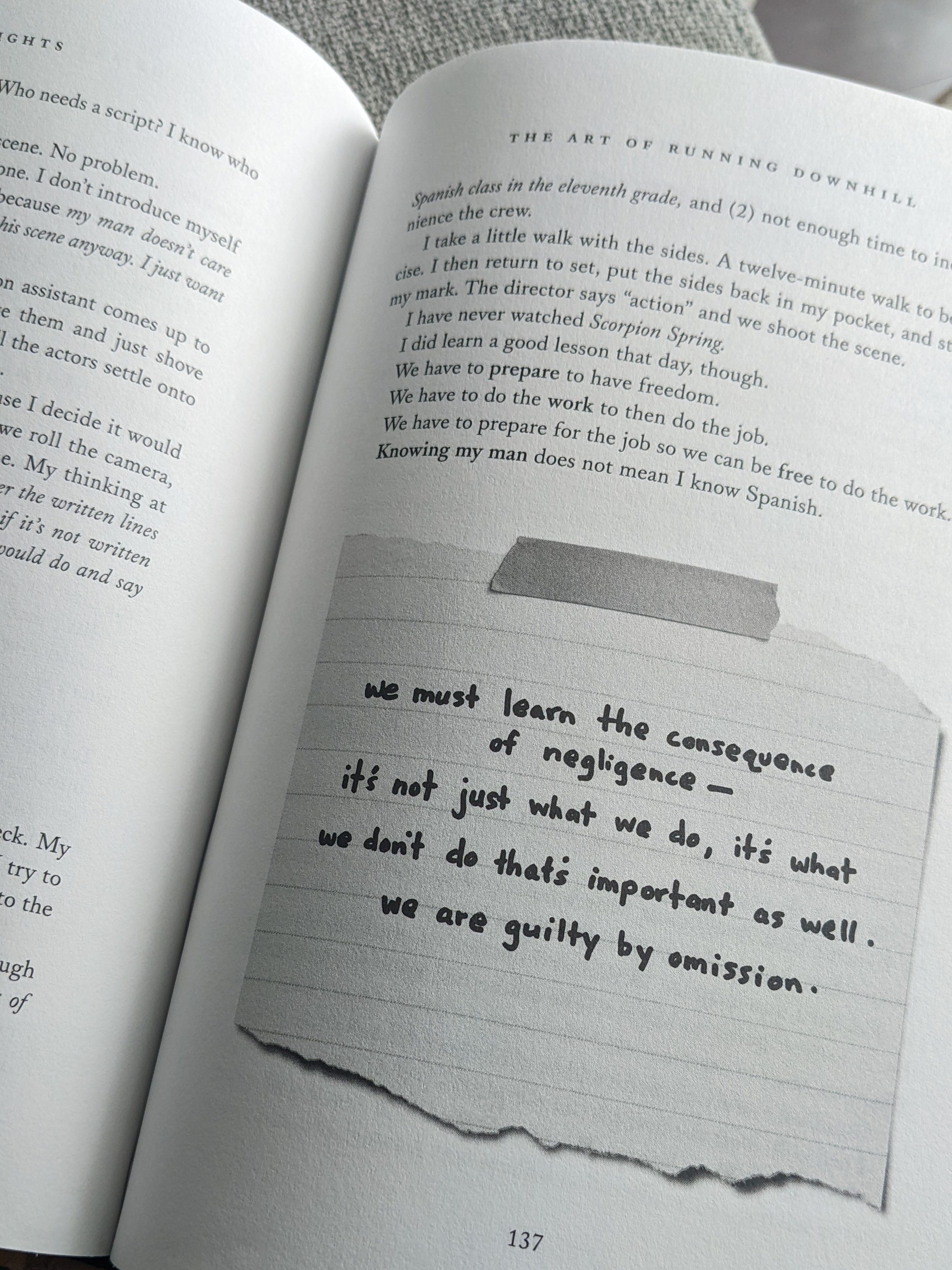
This is my first-ever book review, and I thought I would share some of the “life” things we can all learn from an esteemed movie actor.
To preface this review, I want to say my only knowledge of Matthew M. before reading this was that I knew him from playing the lead in Dallas Buyers Club, which went on to win an Academy Award. Can you guess which part of the book DBC was mentioned? That’s right, near the very end. For the first half of his career, which probably spanned a decade, Matthew was known as the “rom-com” guy and never got any part that actually filled up his soul. Despite his fame, he was battling an internal career/purpose crisis. Like a normal person, Matthew also considered the financial repercussions of not taking jobs even though they weren’t fulfilling. I wanted to bring this up because we often speak of people who are successful in terms of what they’re known for being successful for. And we often either don’t know or don’t acknowledge how long it took to get there. We always tend to fixate on the peak of someone’s journey, but to do this is actually discrediting them for all the hardships they’ve endured getting to where they are. Therefore, we develop a very superficial and shallow view of who a person is based on that one bellowing factor.

This book gives you a chance to look at the journey as a whole and understand that regardless of how externally successful you’re perceived, there’s still so much more potential to be unlocked.
Get to work, and never stay complacent where you are.
Lesson #1: Sometimes Good Work Isn’t Strategic, It’s Authentic

I think what celebrities or famous people are best at is maintaining an image of mysticism. I mean, they’re extremely private, god-given talented, and you think they’re super rich. When we even see a glimpse of normalcy in celebrities, we latch onto it and are even more fascinated because we want to relate to them somehow. And although there is a certain flow in how the lessons are structured in the book, it feels more like personal reflections than preachings. You can also tell an editor probably went in and made it more synthesized, but for the most part, the book feels like a genuine outpour of his thoughts. In the book, Matthew M. said it took 4 years to write this book. And during those 4 years (he’s 53, by the way), he’s had some good time to reflect on his life. In some ways, writing this book changed his life. The book is a goddamn funny page-turner, partly because it’s authentic. He doesn’t leave any details behind, including what he masturbates to and getting arrested naked in a conservative neighbourhood. The irony is those ‘embarrassing’ parts that he might have hesitated to put into the book are probably what makes the book so relatable.
So the lesson here is, as cheesy as it sounds— be yourself. It can be tempting to fit into a mould or always listen to ‘the experts’ who think they hold the holy grail. But at the end of the day, if you produce work that you’re genuinely in tune with, even if it doesn’t perform well, it will at least be yours. I’m not saying to try and reinvent the wheel, but I believe to get somewhat successful, we need first to follow some type of structure that’s been proven before. But once you get in the groove of things, start adding more of your personal charm, your uniqueness, until the whole thing becomes more authentically you. Just look a Taylor Swift’s career, and you’ll know exactly what I’m talking about. From pop princess to bad boss bitch, to peaceful folklorist. This woman has been through a lot, but she has had to endure the tumultuous journey of getting commercial success and toeing the line before she could release more of an authentic sound.
Matthew probably wouldn’t have gotten anywhere in his career if he nosedived and went for the hardest, grittiest roles he could find. I mean, look at his pictures when he was young— the guy looked like he was born to be a heartthrob. So that’s what he did to build trust in the grueling film industry. It was after he got famous + another decade + two pilgrimages that he found his own rhythm and could live in his full truth.
Lesson #2: There’s No Perfect Style of Writing

As someone who wrote professionally for a year, I knew what it was like to have my work accepted and rejected plenty of times. We know good writing when we see it, but it’s really hard to put your finger on why it’s good. Good writing makes you feel a typa way. To me, I always thought the highest standard of writing was in the New York Times, but even in the agency, you’ll find so much variety in style, rhythm, and content. Matthew M’s writing would likely not go into the New York Times or Washington Post. But it’s still so imperfectly good. Having a true voice and the hearty lessons accompanying it is sometimes arguably better than structure.
Most journalism follows a tried and proven structure, but the writer is so good at their craft that their work is able to blend seamlessly into the borders of that structure, But the best work is emotional work. You’re not captivated by a piece unless you’re emotionally attached to the hero. Life doesn’t always follow a straight line, and this point really shines through in the book through his style of writing. His style reminded me of my own: a combination of well-formed paragraphs and ideas, but also paragraphs consisted of sentimental one-liners and sporadic page-long illegible rants.
Do I feel self-conscious about my writing sometimes? Absolutely. But reading his masterpiece (a #1 New York Bestseller, by the way) made me feel more confident that writing, like a form of art, can be subjective..and messy.
Lesson #3: There is genius hidden in the chaos

After Matthew got his first big break in acting, he got fitted in the role of the “Rom Com” stud. Light, easy and well-paying work—well paying enough he could afford a sweet loft on the edge of Malibu. But something was tugging at his heart— it wasn’t enough. So he gave up the house, loaded up an RV, brought his dog, and took off.

There are some parts in the book where you genuinely wonder if he’s okay, on shrooms, or if this is just some woke shit that LA dwellers do. It’s chaotic, reflected in his somewhat frantic tone in several parts of the book. I’m talking about the ‘wet dreams’ he so avidly describes as basically prophecies. In one of his dreams, he was floating about the Amazon River in South America, and he woke up with an ‘explosion.’ That prompted him to take a pilgrimage-esque trip to South America to find that river.

There’s also the scene where he’s playing drums and listening to African music in his humble abode in a quiet Texan neighbourhood and gets ratted out by the police for smoking weed. He refuses to put on clothes and walks to the police station butt-naked. Just because someone acts chaotically and unruly doesn’t mean there isn’t a hidden genius in the chaos. Most creatives, I believe, are bat-shit crazy. Every time I watch a show like Black Mirror, for example, I wonder to myself how in the world the writers came up with this shit. They must be absolutely whacko to come with some of the stuff that goes on in there. Creatives are also known to be severely depressed, neurotic beings. But from madness and pain comes the greatest art. Matthew’s somewhat erotic behaviour is part of his give no bull-shit, go-lucky personality. Still, I think deep down, it’s also a way of his subconscious communicating that something is off. And doing these things is just another form of expression. On the point of giving less fucks, here comes the next lesson.
Lesson #4: We all need to take more risks, and give less fucks

Matthew is a Texan-born, white, 6-foot-something attractive guy. A born movie star, some would argue. With those factors I describe come certain privileges. I realize that perhaps an individual not born into those attributes may have attempted to make the same life decisions he’s made and failed epically. So I want to get that first out of the way. But the way I see it is this. Matthew, like most of us coming out of college, thought he was going to have a stable job— like a lawyer in his case. He was ‘kind’ of into film, but it was his brazen confidence that he could make it and a lot of hard work that made him into a star. Every time he stepped into an audition room was a risk, an opportunity cost. He could have gotten any ‘stable,’ conventional job, but he chose acting because he felt that was his calling at the time. He was good, but he wanted to get better. Remember, there are far more good-looking White Chads that don’t become epically famous than there are that do.
He took a giant risk by saying no to the rom-com offers that came his way trailing his newfound Hollywood fame and following his gut. He maintained a religious work ethic prepping for harder roles, pushing himself to physically and mentally to ‘become’ that character— even when there wasn’t a 100% chance the movie would get funding. The resounding theme throughout the book is “Why the heck not?”
Life’s too short and singular not to try, at the very least.
Lesson #6: Confidence is a Fine-Tuned Instrument
Matthew’s life wasn’t all green lights. Sometimes, a light starts off red, turns stale yellow, and then finally green. Each light has its own value.
Red light forces us to adjust.
Yellow light encourages us to improve.
Greenlight gives us the confidence to keep trying.
He said he made it a priority in his twenties and thirties to mitigate and eliminate a number of yellow and red lights so he could reap consecutive green lights in his 40s and 50s.
Lesson #7: Know yourself and your values before committing to a life with someone

Matthew doesn’t really speak about relationships until his mid-thirties. For the first half of his life (three-quarters of the book), he was really working on developing and honing his craft as an actor and doing things purely for himself, like the three-year road trip, starting a production company, and doing more films. He was also cultivating principles and values he already possessed but wanted to live out. In a way, he was ‘preparing’ to meet the right one.
When he met Camile, his priorities shifted. His highest priority was always to become a father someday. One of my favourite quotes from the entire book is
“the great man is not all to each,
he is each to all.
The genius can do anything
But does one thing at a time.”
(McConaughey, 238)
In my morning, he got rid of two seemingly big things that were eating up his time, one being the production company, and tailored his focus towards his family. Matthew is a man that knows when to give it his all, what to give it to, and when to let go.
I think so many of us feel pressured to juggle multiple things, not understanding how that impacts the things we should focus on. Finding the right thing to focus on is a hard skill that requires self-control, but once learned, is extremely powerful. Matthew’s dated a lot of women prior to Camille, but as he puts it, were “all stops, and no stays.” Finding himself spiritually and creatively were essential values for him before he could settle on the right woman.
Lesson #8: Not all Hollywood stars are cheating douchebags

It’s refreshing to see his unwavering loyalty and affection towards his wife, who he shares three beautiful children with. They’ve been married since 2012 and were together even further back. The memory he describes of how they first met to the exact detail of what she was wearing that night practically drips with adoration and deep respect. Actors and famous people sometimes get a bad rep for messy divorces and infidelity, but you can tell in this case, “Fourteen years later, she’s still the only woman I ever wanted to take on a date, sleep with, or wake up next to (McConaughey, 229),” he’s locked into “the one.”
As a woman in a relationship, sometimes seeing the amount of cheating scandals in the media is upsetting. It makes you doubt whether the same thing will happen to you. I think it’s important to note that what we see in the media is usually only negative because it’s the negative things that drive virality. We also have no idea what’s going on in that person’s life or relationship, or whether the rumour is even true, so we’re really in no position to judge. They don’t show you headlines of a man stuck by his wife for 50+ years, never even blinking an eye at another woman. They don’t tell enduring love stories as much as they love ratting out people at the most vulnerable point in their relationships.
Lesson #9: There needs to be a period of silence after a period of success

There’s nothing wrong with rewarding yourself with physical things after a period of monumental success. But in time, you realize those physical assets don’t actually bring joy. People chase success because they believe it will make them more content and happy. The truth is, taking in success as a lump sum rarely breeds contentment. Fame, money, and recognition came when Matthew made his first break in the industry. But none of it felt appealing after a short while. That’s why he spent three years on the road in solidarity, interacting with people who didn’t give a hoot about who he was. He took off to South America to meet tribesmen who REALLY didn’t know who he was. This was not only a humbling act but a service towards himself. A silent period to come in tune with who he was at the core and not what everyone in the world thought he was from the characters he played. Hollywood could have easily dulled him, removed that wanderlust and free spirit. But there was no way on heaven or earth he would let that happen. Remove the noise, and start listening inwards.
Closing Thoughts
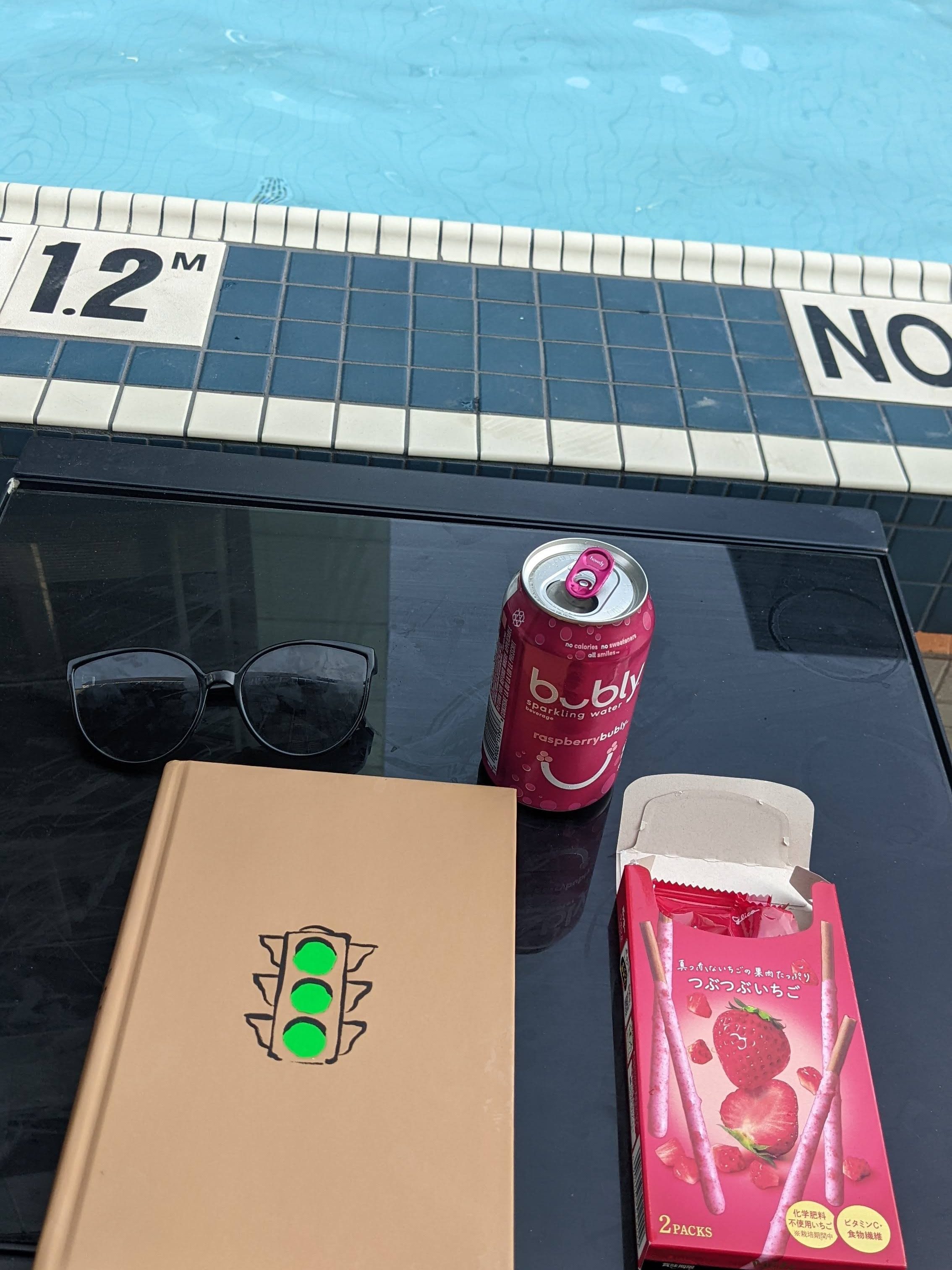
I devoured this 289-page book by the pool because it was thoroughly entertaining. If you’re not into the self-help thing at all and you enjoy a light-hearted vacation read, this book is for you. If you’re easily triggered by, I don’t know, #whiteboywokeshit, don’t read this book haha!!
My only complaint throughout the book was, “C’mom, where’s the hardships?” In the way he described his life, it was a lot of entertainment, with some small hiccups here and there, but traditional success came quite easily for this guy. It didn’t take him too long to land the TV part that would turn him into a household brand— that show is called A Time to Kill, by the way. McConaughey takes us along in his peculiar but wildly amusing journey of a life with him. And it’s delicious to consume, but it might make you feel like, “Wow, wishing it came that easy for me.” Keep in mind, true internal success came for him near his 50s. Sometimes finding success requires you to go back and literally iterate your life (in this case, in a form of a memoir) to simply acknowledge the milestones and the neat lessons tucked into the forgotten eras of your life. This story isn’t just for us to understand him as a person better, but I have a feeling it was mostly an act of self-love, self retribution.
This is a special dude, but his story also tells you that special dudes are ordinary people with the same choices at the end of the day. You can be born gifted, talented, and Zeus-level attractive, but if you don’t have the tenacity, the do-or-die mentality, you’re not going to get Zeus-level results. Wherever you think you are right now, there are always ten steps higher to go. And it should always feel like that until the day you’re on your deathbed. And I don’t mean that in a depressing, self-critical way, but I mean accepting the fact that if you’re growing, you will honestly be happier in life.
So enough of me talking, go and give Greenlights a read, and let me know what you think! Leave a comment or find me on Instagram @saverudela_vie
 Secret Prose
Leave a comment