
Disclaimer: This article solely reflects the opinion of the author and should not be taken as financial or investment advice. Please seek a professional and accredited investment adviser if you’re looking for investment advice.
Growing up, the terms “live below your means” and “financial freedom” were thrown around like dice on board game night. In theory, believing that you’re working towards something as significant as financial freedom softened the harsh reality of what the majority of the population actually will do.
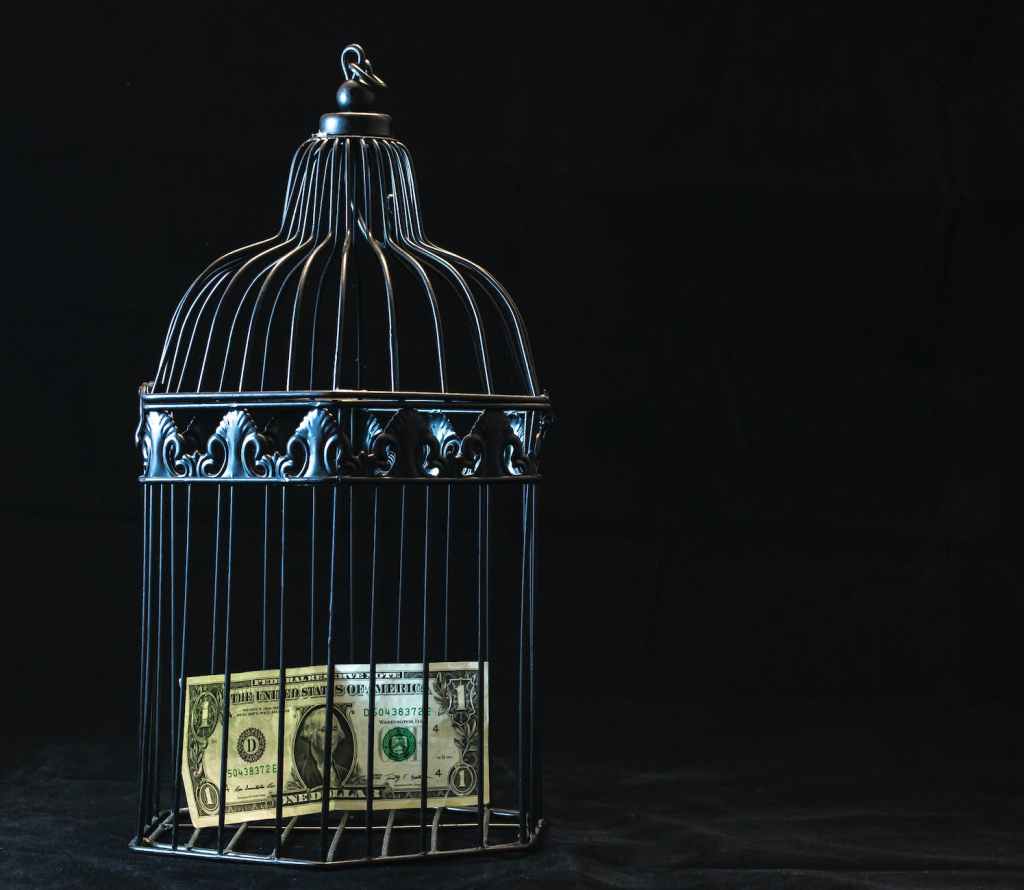
These financial preachings spoken by the flurry of individuals, and advice from “millionaires” on the internet permeate your subconscious to the point, where your bank account feels like your personal cell. You feel encapsulated by invisible metal bars. I’m reminded of the dark days with an eating disorder, where life became a stringent rulebook, with self-worth on the line if you didn’t play within those rules. Life was black and white, good or bad.
I was made to believe that I was always “bad” with my finances. That I lived life too much on the “splurge”. These sentiments not only came from my family but were implied in even the most casual remarks from friends.
Watching my mother’s buying habits growing up, like many Asian moms, every dollar mattered. Time was not so paramount and it was about what she would do to get that $10 or $20 discount. My dad, on the other hand, didn’t possess much financial literacy other than the concept of providing for his family—at whatever the cost. I don’t think to this day, my father has a single dollar invested—because “he doesn’t trust the stock market.”
As we’re going through an economic downtown and reflecting upon the various ups and downs with my personal finances since I was the age of 16—I thought I would share some of the false beliefs that continue to limit us as individuals, and as a society.
🏠 #1 The Most Important Financial Investment is your Home
A home, for many, is seen as a holy grail sign of “You made it.” It doesn’t matter if you had to work yourself to the bone (have 3 jobs) to purchase this hefty investment, but now you’re automatically “secure”.
People look at you differently when you say “I own my home” and you’re below the age of 35 in Vancouver. It’s almost like a sense of awe.
Because of the type of people who I was surrounded with (generally high achievers), I naturally assumed my “next life priority” was to save for a house. Here are reasons why owning a home, doesn’t actually make you feel secure.
If you’re an employee, you’re saving *at least* a couple of years to secure that lofty 20% mortgage downpayment. For a $1 million property, that’s around $250,000.
Not many have the means to save up that much, even when they make six figures. This is simply because the living costs in Vancouver are astronomical, compared to other cities in Canada.
Let’s say you somehow cough up that amount —perhaps through the line of equity, private loans, savings, or a combination. Now you’re strapped for 20-30 years on a mortgage that restricts you from having any risk when it comes to income. If you’re someone who’s thinking of starting a business from scratch, you won’t be able to. You need a stable source of income so you can continue paying off your house for the next while.
Why is this a kind of detriment in your 20s—even 30s?
In your 20s, you’re exploring. I don’t care what career you think you’re pursuing, everything is baby steps right now. You’re launching yourself into this unknown abyss, and experiencing different things, learning what you like and what you don’t. Now you might be thinking of traveling—which becomes hard when you own a high mortgage property. Yes, you can rent it out, but how likely is it you’re going to find someone who’s going to pay $4K-$5k for the rent, short-term (this just helps you cover your mortgage, no profit whatsoever) while you take off to the Caymans for a month or two?
In a city like Vancouver, you can bet on real estate prices going up. But you’re expected to hold onto that property anywhere between 5 to 20 years. “Flipping” for high margins is no longer that common anymore.
Bottom line:
- ❤️🔥Your self worth ≄ your real estate asset
- 💸Unless you’re a millionaire, buying a home can become a big liability (it’s no different than buying a car you can’t afford.)
- 🧳Live your life— Save your money, take calculated risks, bet on higher-margin investments (like a business), and use capital gains from those investments to using towards down payments (not your SAVINGS)
- The most important investment is not your house, it’s YOU.
→
- 💡Invest in upskilling, reskilling, new business ventures, travel, experiences, love..etc These are things you will regret not doing when you’re in your 30s.
💰#2 Save, Save, Save
Savings are purely a mechanism that ensures you’re not overspending more than you make, and that you have a good buffer (in case something happens). If you have more questions on how I determine how much I save a month using a logical formula (no “woo woo” magical numbers) → check out this post.
Instead of thinking of it as “saving money” I think of it more like reallocation. The term “saving” sounds like you’re removing a chunk of money and storing it inside some type of cement box (your bank account) and it doesn’t actually do anything for you from a values perspective, other than a bit of security.
For example, I prefer to bring my own lunch on weekdays (even if I prefer to eat out), because I want to feel completely at ease splurging more on the weekend with loved ones and friends. I don’t want to worry about the bill when it actually matters. Skipping that $10 sandwich is worth it for me to have an illusive experience at a local cocktail bar or have a nice dining experience at a restaurant later in the week. I save on gym memberships because I get all the equipment I need for a minuscule price tag. The money I save from the gym can fuel my self-care or skin routine.
I will forgo buying clothing for a month, to save up for a quick vacation somewhere nice. It’s not like I’m barred from spending money on clothing and accessories, but I’m just putting that on hold so I can reallocate those funds toward something else I care about more.
Recently, I even quit my cafe habit (shocker), unless I’m indulging in a nice cafe date with a friend. Believe it or not, forgoing this habit saves me around $200-$300/month which I can reallocate to something else I value.
Save when it’s easy to do so, and identify what are the things you prioritize spending money on. Once you gain clarity on that, knowing how to “save” properly becomes easier.
Don’t spend “stupid” money—money you’re pressured into spending by family or friends, or on things, you could have easily purchased reduced (with no additional time cost). Do not line up for sales—-I repeat.
📈 #3 Protect your Money Against Inflation
The most common thing you’ll hear is “hedge your money against inflation.”
The truth is, if you put your money in relatively moderate investment profiles, the gains you make are so minuscule it might as well become another savings account. I made a total of $40 this year, a laughable amount. This barely could buy me a meal.
My investment account is not an investment account—it’s actually just another savings account.
So no, you are not “hedging your money against inflation” by throwing it into a mutual fund. The market is volatile, and regardless of how much expertise the money managers are, there are certain economic trends they can’t control (ahem the war?). At the end of the day, they get paid more if you invest more money with them. So take this advice with a grain of salt.
Ironically, you could go to Las Vegas and win a bet that could 10x “inflation rates”, not that I encourage gambling, but I’m just using it to exemplify how weak this overall argument is for investing your hard-earned cash, particularly for those living in the below $70K range.
Remember, investment isn’t really designed for the lower income brackets—this applies to almost everything. Yes, even playing slots in Las Vegas (note don’t go if you can’t afford to bet thousands).
Conclusion
I realize that the prices I’ve mentioned above can feel quite drastic or out of touch for some. It’s definitely possible to purchase a more affordable property from the $400k-$800k range (in Vancouver), I merely used $1 million as a typical benchmark for a relatively new, 2-bedroom place in a city (non-urban area).
Again, I want to firmly reinstate that I am no financial expert nor do I have any certifications or degrees in finance and investment which means—please take everything I say with a grain of salt. This is purely my opinion and is bound to change with time and changing circumstances in the economy.
What I’ve come to realize this year, is that I wasn’t as terrible with money as I assumed. There are some circumstances like high living costs, and subpar wages, we can’t change, but we can change how we react to them. For example, giving myself compassion and breathing room around this subject has helped ease a lot of the pain I was subconsciously subjecting myself to for years.
And also, I want to emphasise that someone else’s spending or saving habits have nothing to do with yours. Never use your friend’s financial benchmarks as your own— as we’re all in different boats here. Some people have debt to pay off, for example—this is not my case, therefore, how we spend and allocate our capital could look very different. Some people will not agree with me about real estate because they’ve invested a couple of years ago, maybe, at the right time in the market (when interest rates weren’t deadly 💀).
Some people make significantly less or more money, which will change their lifestyle, investing, and spending habits.
With that in mind, I’m curious to know— what are some of the money beliefs you were taught, and no long subscribe to?
Let me know in the comments below.

 Secret Prose
Leave a comment