


I think most of life’s magic happens when we’re able to combine creativity with logic. Think about engineering a rocketship. Much of its conception requires complicated math equations and physic formulas in order to determine the amount of fuel that is needed to power this gregarious engine, and what precise shape and weight the body needs to be in order for it to be allowed to lurch into space.
However, at the foundation of the rocket ship is hundreds of sketches, palettes, and a dream.
Many of these complex processes require a deep form of memorization. This deep form of memorization is only achieved through repetition, which leads to the strengthening of neural links until concepts and processes are ingrained in the fabrics of our memory. Just because you haven’t ridden a bike in years, the neural bonds that were formed an eon ago are still there and can be reactivated as soon as your body picks up the need to balance and go.
Memory formation can be expedited. And this is what many of us wish would happen as we went through traditional schools. We want to memorize the material, perhaps, a day before the test because we were too busy binge-watching the latest season of the Kardashians.
Now there are many psychological tactics we can use to imprint ourselves faster with the knowledge we wish to obtain, but deep learning occurs only through deep understanding. Merely knowing how to read or write words verbatim is not truly effective learning.
One of the best ways to learn a concept is to visualize it in our own minds and be able to explain that concept to someone in our own words. This learning is further enhanced if we’re able to form a connection to the concept, which is now tapping into the emotional portion of our brains.
Think about why trauma is so easily triggered and remembered, even when it’s a one-time occurrence. The reason is that the emotional disturbance is so impactful, that it’s in a way stickier in our minds. Even certain environments, scents, and sounds can invite that memory back into our minds.
On the positive side, there are ways to overcome trauma; however, ways that don’t involve eradicating the memory. Resolving trauma requires a lot of work in understanding the trauma, unwinding it, accepting, forgiving, and letting go. We’re mentally rewiring our thought patterns in a way that doesn’t exclude the memory, but rather come to a healthy understanding of it being in our past.
The point here is: humans tend to trigger memories faster with emotion. Knowing this, we can use emotion to our advantage to help us learn the most difficult tasks and achieve extraordinary things— things we didn’t previously think we could learn.
That’s the beauty of learning. And contrary to popular belief, it shouldn’t have to negate emotion, in fact, we should embrace it as a tool to help us learn faster.
The Rising Popularity of Presentations

Shortly following the first technological boom in the nineties, educators and business people alike were quick to jump on the presentation train.
At first, it was Microsoft Powerpoints, but then other companies began to see the value in making slides more visually attractive.
I remember when Prezi came to the market, it was this revolutionary thing. Because it made presentations interactive and it was one of the first one to do this. Nowadays, there are companies focused on making presentations as visually stimulating and interactive as possible, such as with VR/AR integration.
Have you thought about why these markets became as big as they are?
Humans are visual creatures. We form special attachments to the simplest of things; such as the way a font looks, to the colors a restaurant paints its walls.
Why do you think physical branding is so important to companies? It’s because the customers form special connections to the way it appears, based on some emotional encoding.
Besides just the visual features, why are presentations enforced from an early age? Well, presentations themselves imply that we must physically present our findings. In order to do that adequately, we must really understand the concept so that we’re able to explain it and pick out key points to put on slides that have limited real estate.
This is the essence of presentations—it goes beyond just the logic, and the chronological order of things but requires us to be a little creative in how we convey our ideas to a larger audience.
In order to persuade someone, let’s say to buy your product through a presentation— no one wants to hear a robot recite off the slides. People want to hear the emotion, passion, and perhaps even a few jokes here and there. They want to connect with you through this product.
So although sales itself is by theory very logical—I’ll trade you X amount for a Y. The nuances around decision-making; pricing, convincing the other party that the pricing is equivalent to the value given, and making a memorable impression amidst a load of competitors are practically more emotional than logical.
Next time you want to learn a hard concept; think about ways you can break it down visually. Make an outline of all the components of the concept, and lay it out chronologically as if you’re going to present it to someone later on. Just as if you’re writing a novel, you can’t skip one event if you want to move on to the next chapter. If you want a heart-wrenching tragedy, Jack can’t die before he falls in love with Rose on the ship.
Make Analogies your Best Friend
Writers use analogies to make their writing more understandable, especially when they’re explaining more foreign concepts.
If you’re able to link an unfamiliar concept to something that almost everyone can relate to, you’ll have better luck learning it.
As I perused some of the products on Amazon AWS recently for writing practice, I noticed a common trend. Despite the complexity of the products, the writing team at AWS really endeavored to make the language palpable to regular folks. They frequently used common language; instances, alarms, metrics, run..etc to help us triangulate information in a way where it could be understood almost immediately what the functions were.
For example, API is technical jargon which basically means the point at which two different software can communicate with each other. Frequently, API is referred to as the “waiter” or the messenger” that communicates the customer’s order back to the kitchen, in order to elicit the right recall. When we add this analogy to the mix(almost everyone has been to a restaurant), the term is better recalled.
If you want to learn a concept faster, try to form a story around it. Storytelling requires us to form emotional connections with the plot, the characters, and the outcomes. It also requires us to analyze and understand why things turned out the way they did. Alas, great storytelling makes a greater imprint on the reader’s memory.
Create Steps, Processes, and Questions through Visualization
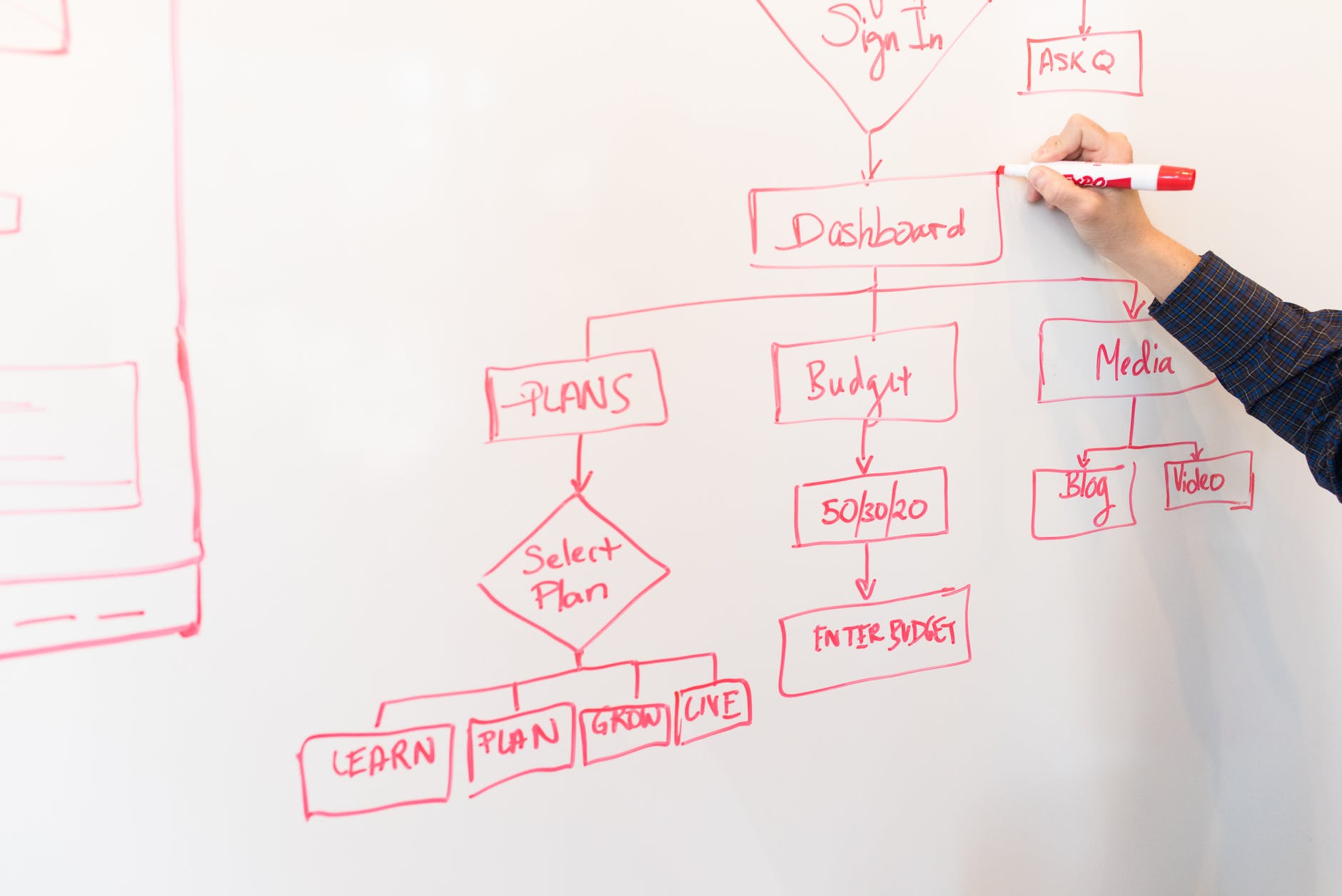
There can be a bit of frustration that comes with learning challenging concepts. To decrease the mental load that comes with this influx of information, it helps sometimes if we can organize and express it through visualization.
Take out a large piece of paper or if you have a whiteboard (use that). In the middle of the paper, write down the concept of the theory you’re trying to learn. And then start linking it to different concepts, and construct branches from those concepts. Write any unresolved questions on the board and the concepts it relates to. Once you have everything laid out in a visual format, you can begin to see where you can create different processes, which will help you understand the concept better and diagnose unresolved problems. You also can visualize the gaps in your understanding, and know what types of things to pinpoint throughout your research process.
By really getting into the nooks and crannies of a concept you’re trying to learn, you’ll be able to explore it in more depth.
Conclusion
When we’re working on logical-based tasks, visualization may not be the intuitive choice of tools. As a creative, I have found using visualization techniques to be tremendously helpful in making, let’s face it, sometimes boring or uninviting tasks more exciting.
It helps me learn faster when there are visual aids available, a roadmap, and more importantly, a personal connection to the concept I’m trying to learn.
 Secret Prose
Leave a comment