From the time we can walk on our two feet, we’re bombarded with the question of:
What do you want to be when you grow up?
Some wanted to be firefighters, other princesses, and many go as far as achieving what they sought to do from that innocent phase.
This prompts us to think about our identities relative to what we do career-wise. The danger of this is that when we’re severed from that role— we find ourselves in a serious predicament. If I’m not X, what am I?
We fail to account for our personality traits, our interests, and our histories which contribute to a large part of our identity. By tying ourselves down to a single definition, we thereby limit our potential to try and pursue new things. And we subject ourselves to periods of self-doubt when we don’t meet those subconscious expectations.
I’ve personally suffered from career attachment since I was in high school. For two or three years of my adolescence, I was determined to be a nutritionist. My lifestyle and extracurriculars reflected this career choice, or so I thought. Every day I had the same meticulously prepped vegan meals, Lara bars and I ran cross country 3x a week and lifted weights twice a week. I also ran the school’s nutrition club and poured my efforts into creating ‘healthified’ baked treats for fundraisers. I aced home economic classes, again with acute preparation, research, and knowledge of basic nutrition. I remember once going into one of the classiest French restaurants in the city, and when an elderly lady approached me in the bathroom and asked me what I did, I replied “ I study nutrition at UBC,” even though at that time I was still far from graduating high school.
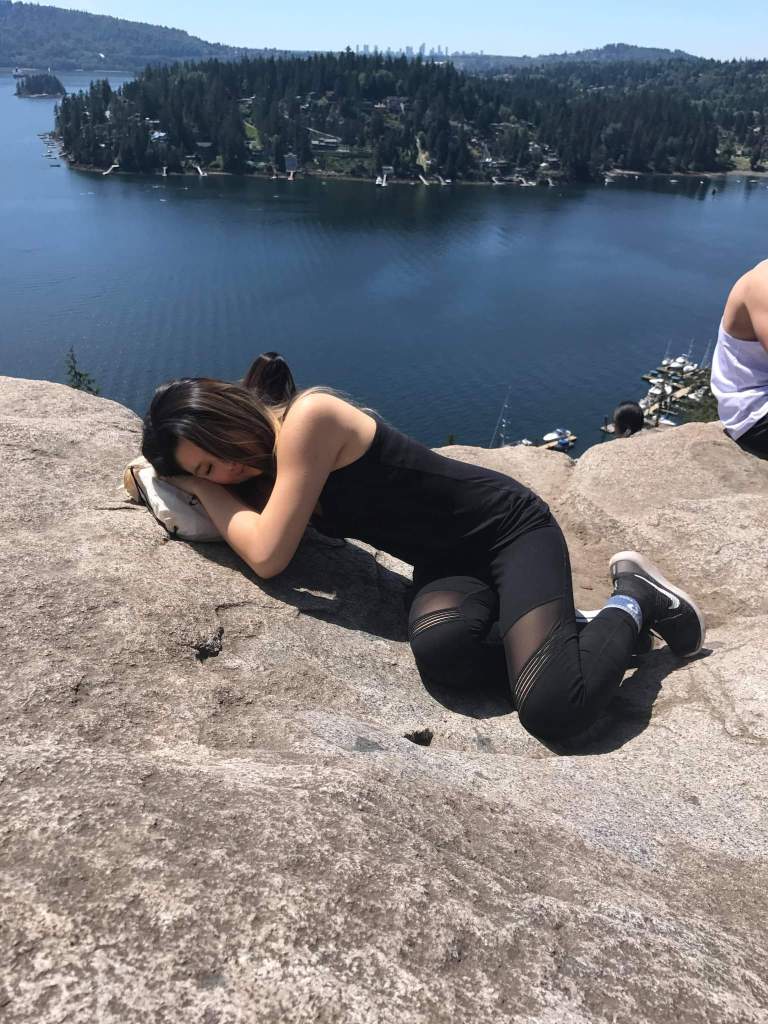
Here’s where the story turns. I got into the Land and Food Systems at UBC, which is the prerequisite program for nutrition. Within one year, my life and identity took a dramatic hit. I no longer abided by the same health rules, given free reign of the school cafeteria, besides sneaking in a salad every meal and having freshly prepped vegan apple oats for breakfast (I know I was spoiled!). I had serious weekend benders facilitated by the college environment. In turn, I flunked my science and math classes despite how hard I studied for them. I went from being a 99% student to barely breathing. Suddenly I adopted this persona of ‘life of the party’. My extroversion hit an all-time high that year. Looking back, I felt like a completely different person in contrast to just a half year ago.
In a large part, failing for the first time had a big impact on my relationship with myself and my identity. If I wasn’t the good, straight-A student, nutritionist to-be, who was I? It seemed like my life was headed in a negative direction.
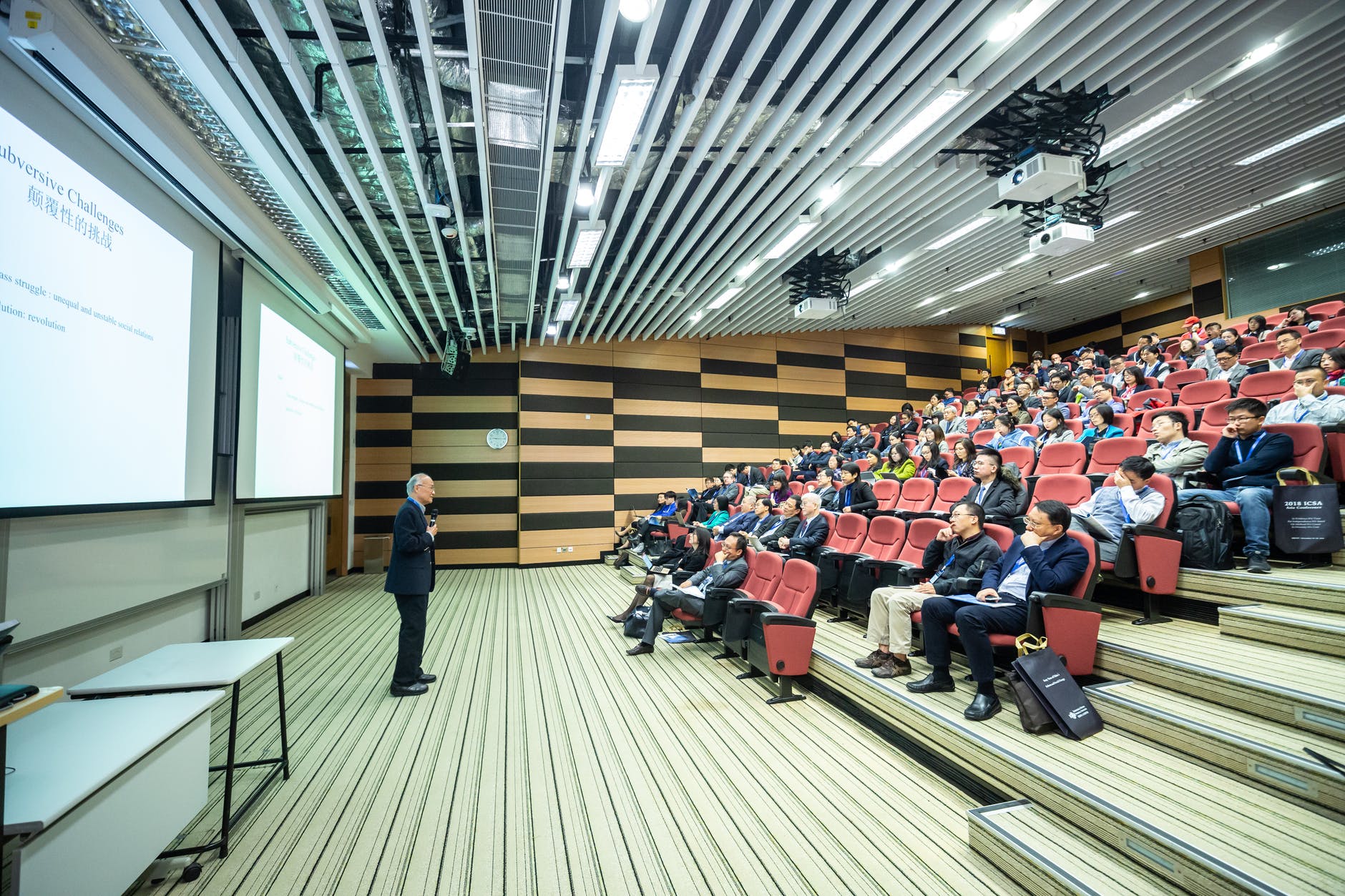
But even if I was deemed ‘a close to failure’ I wasn’t one to give up. After a ten-minute conversation with an emotionless advisor who basically told me to either get it together or screw off, I adapted my courses to things I actually enjoyed. Naturally, I enjoyed social sciences and things like urban planning/ design. Anything that sparked my curiosity, allowed me to explore, write and speak. I remember the first time I raised by hand in that large lecture hall with more than 300 people. It felt liberating and empowering to inquire freely about something I was actually interested in. Within half a year my grades bounced back by 70%. I was now at least a solid B+ student. I fell in love with studying political sciences. Why? It felt like an endless well of curiosity, and the more I dug, the more I seemed to not know. This was incredibly satisfying, even if it meant taking somewhat more boring prerequisites like government classes.
Naturally, this takes me to part 2 of my identity crisis: my attachment to my degree. Close to graduation, I was already scouring the internet for internship opportunities with IGOs and the government— I was convinced I would become a political scientist as my degree had suggested. What was stopping me from this? I loved the subject and although I was not the top of the class, I at least was decent at it. I wrote out a comprehensive life plan, two forks, two options only. I would become a diplomat or open a consulting company by the time I was 30. This is still what I tell people when they ask me ‘what’s the plan’. However, at this time in my life, I’m nowhere close to achieving either. I took the opportunities that were available and put these dreams on the backburner. In the process of doing so, you can probably guess it, a third identity crisis.
But before I go to the third, I wanted to reflect on why was it I was so intent on a career in politics. Was it the politics itself? Absolutely not. I despised reading or even writing about the news. In school, it was not so much the day-to-day politics or government I was interested in, but analyzing problems and power struggles. I liked looking at a problem from multiple angles and finding a logical solution. Problem-solving, negotiating, and seeing the world from an advanced place were what I craved. It was a balance between the autonomous nose deep research time and sharing this knowledge amongst others, all in search of a greater truth.
Now this description could have everything and nothing to do with politics itself. That’s the beauty of it. Perhaps, I didn’t have to restrict myself to one specific realm, but as long as I could find a career that curbed my satiety for curiosity, challenged me to think outside the box, and allowed me to connect with bright, intellectual beings— maybe I could be happy… without having to adhere to a certain identity.
The third and most recent crisis I faced: was an identity I never thought I would develop. I didn’t think I would become a writer, even though I knew by my 60s I would produce a book. I’ve never associated myself with being a writer, even though I frequently wrote and love it. Writing over the years became like breathing to me. I would write early in the morning; essays, poetry, short anecdotes, you name it. In grade school, I would turn a one-page assignment into a 5 chapter short story. Typing away at my computer brought me an inexplicable amount of joy, especially coming out of the flow state. I blogged early on, wrote excessive Instagram captions, and wrote articles in my free time about what was going on in the world during the pandemic. I didn’t associate myself with being a writer until the opportunity presented itself.
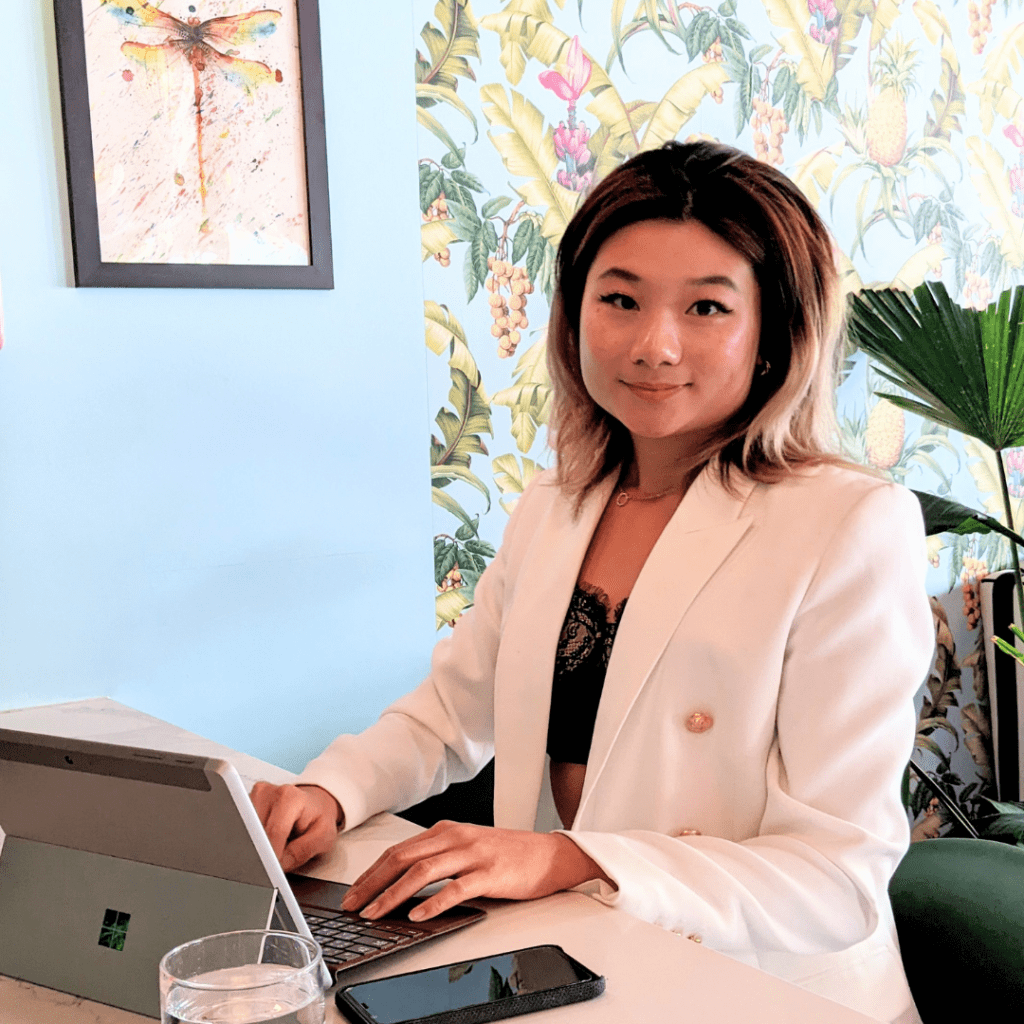
All of a sudden, given that you know me by now, I latched on to that new identity as if it were a buoy in a sea of uncertainty. But being a writer meant I was subjected to my laptop writing all day. Writing on things I didn’t necessarily care for because it was a part of my job. I struggled because a part of me wanted to do more, yet I was so attached to perfecting this first. There was a part of me that liked to create, beyond just using words. There was part of me that loved to connect, beyond just relaying information to people. There was a part of me that still wanted to explore.
Those three dips in my life disclosed to me the real tension I held with associating myself with certain identities. My identity as a nutritionist didn’t account for the Naomi who enjoyed other things in life beyond food and exercise. My identity as a political scientist didn’t account for my innate creativity and interest in things beyond politics, like tech and business. My identity as a writer didn’t account for the fact that I was more than just a decent writer. I was a human being that was still climbing, tumbling, learning, and growing. Despite not always getting it right, I wasn’t a ‘bad’ anything— I was just a lot of things. Coming to terms with that I wasn’t perfect in at least one stream is hard to accept. Although I thought I left that perfectionist side of me locked away in a different life; my thought patterns, the black/whiteness of it all still dictate how I see myself in this world.
Letting go of those identities is hard and it’s always a work in progress. I need to learn how to see myself under different spectrums of light, get a little more creative with it, and bypass that part of my brain that likes to link interests to a ‘logical’ career choice. I know now that my interests are fluid, and for me to grow I need to venture beyond what I think I am good at.
It’s easier sometimes to put ourselves into a box because all we’re required to do is to fit ourselves into the box and we think everything will work out in our favor. The truth is, even when you build confidence by excelling at one thing, there’s nothing worse than feeling like that’s the only thing you can do and which defines you. As humans, we’re not meant to be pushed down. We have so many facets upon which we can explore and rise. And maybe, some, you haven’t even found yet.
To those of you that struggle with identity and struggle because you’re so dedicated to what your doing— don’t let yourself be strapped down to it. You are many, many things, but you are not your job. Your job doesn’t define who you are.
 Secret Prose
Leave a comment